Analytical kata
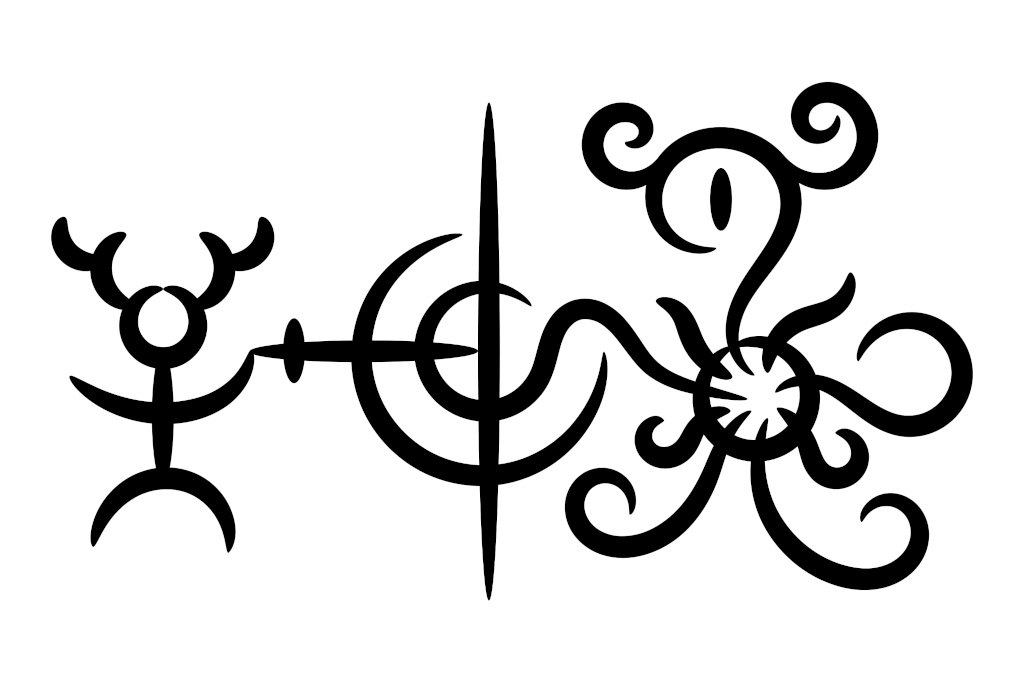
Practical understanding of reality relies on pattern recognition. Humans, cats, dogs, and even AI-powered drones - we all work with patterns in data and save them as symbols.
Given enough time, all individuals with similar sensors and environments will find more or less the same patterns and end up with symbolic worlds that have almost identical parts.
These parts are our collective unconscious, and, despite all the criticism, they have to be there. There is no other way.
This means that the lists of symbols and archetypes, introduced by Jung, make a lot of sense. As a pioneer, he didn't have a computer to play with big data himself, had to guess a lot, and missed quite a few times, but he was close.
Of course, patterns are fuzzy by definition. It's hard to test and falsify them in a conventional sense. Yet there is a way to use them in practice. It's not a way of theorists who want to see a solid proof, but a way of warriors who need to get the job done.
In martial arts, you study a thousand fights, prepare sets of movements that work against things that are likely to happen, and practice them as kata. During these exercises, you fight imaginary opponents that fit in your statistics.
When needed, you replay these movements, and it looks like you know what your enemies will do in advance. You don't passively react to their actions, but move away from places that they're about to attack and hit places where they'll be in a second.
Sometimes it doesn't work. You have to improvise. But, since you started with statistics, it should work in most cases.
In some sense, analytical psychology is the same process. You study patterns, prepare for things that are likely to be in people's heads, and then you hit. And, usually, it works.
This approach has nothing to do with spirituality, non-casual synchronicity, or any other magical mind-reading woo-woo stuff. It's all about similar designs, same environments, big numbers, patterns, preparations, and good guesses.
Knowledge about common symbols isn't a cure for anything on its own, and it's barely connected to our system, but it can complement our standard blocking technique aimed at resolving logical conflicts in behavior. It's a good supporting tool.
Combinations of symbols can provide clues that point at the lost reasons behind the orphaned rules in a memory graph, help to re-evaluate them, discard, and fix related conflicts.