Path of adaptation
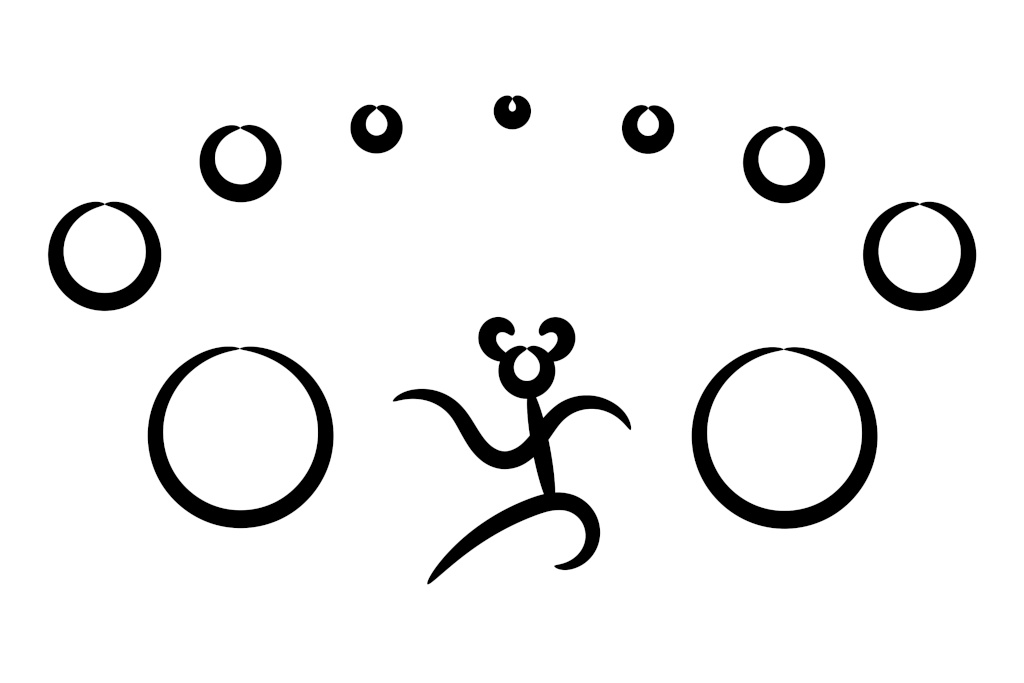
Once in a while, a beautiful word "kolgotit'sya" can be heard in our villages. It's hard to translate its cultural context, but it means something like "be busy, run around in circles, doing various small tasks without any significant effect on anything".
We often see that behavior in traditional households. Everybody in a family has something to do all the time, looks like a hard working man, and gets respect from neighbors.
However, the annual cycle of life in villages directly depends on nature. You spend a few days of spring and autumn planting and collecting crops, and another week of summer removing unwanted weeds, but the rest of the year is almost free of tasks. You need to cook and do laundry, but that's about it.
How can you be constantly busy in those circumstances?
Let's say you make a standard lunch. It should be easy. But you don't store kitchenware in a kitchen, do you? Of course not. You need to walk around a house a few times to collect everything.
Food is spread across multiple rooms and, preferably, several buildings. If you want a fried potato, you need to get fully dressed and go outside...
It was snowing yesterday. You take a shovel and clean a path to your barn. Meanwhile, dogs ask for a walk. You can't reject that. While walking, you meet a neighbor who wants to borrow some tools. Right now. You clean another path to your garage and walk back to get the keys. You get back with the keys, open the garage, check a car, clean some mess, find the tools, close the garage, return the keys, talk to the neighbor again, and finally get to the barn, grab a potato, walk back, clean your shoes, and then remember that you also needed milk...
You'll be a busy man, I can assure you. A lunch can take hours to prepare because of these unnecessary side quests. Some guys even go to a grocery store three times in a row, never buying everything they need, just to go there one more time.
People destroy their personal plans and adapt to never-ending issues. If nothing happens, they look hard for something that'll break their plans, and adapt to that. Processes are never optimized. Nothing is ever in place. Things are getting lost all the time. You constantly get more tasks to do.
This is a good example of how we synchronize environments with our patterns of behavior. In this case, we're talking about patterns (9) and (16), with a basic impulse of adaptation as a central theme, but the same happens with other patterns as well.
Once you see this effect, it's hard to unsee.